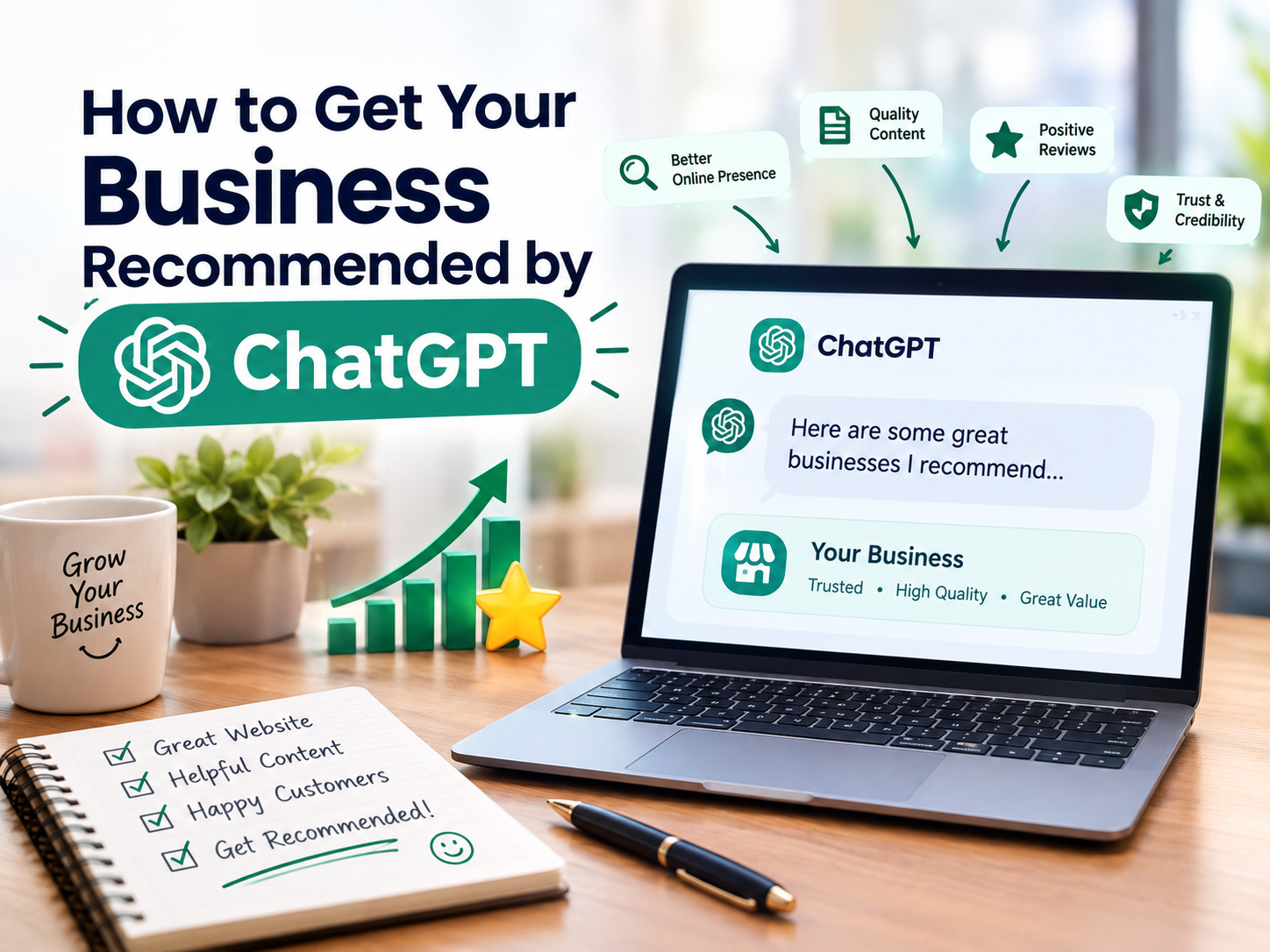
Imagine a person opens ChatGPT and types, “I want a reliable SEO corporation for my small commercial enterprise. Who should I contact?”
Your company could be a good fit. You might have years of experience, a decent website, and happy clients. But if ChatGPT doesn't mention your business, that potential customer may never know you exist.
This is where things get interesting for business owners.
People are the use of AI gear to evaluate organizations, find local services, research products, and slim down their alternatives earlier than creating a purchase. Showing up in these conversations can put your business in front of people who are already looking for what you sell.
The difficult part? There's no button you can press to make ChatGPT recommend your company.
You need to give search systems enough reliable information to understand your business, what makes it relevant, and where it fits.
Start With Your Website, Not AI SEO Packages
Before spending money on AI optimization, check whether ChatGPT search can access your website.
It sounds obvious, but technical problems can get in the way. Your important pages might be blocked, your robots.txt file may contain unwanted restrictions, or a security service could prevent search crawlers from reaching your content.
OpenAI uses OAI-SearchBot to discover websites for ChatGPT search. If you want your website to be considered for search results, check that this crawler isn't being blocked accidentally. OpenAI explains its crawler controls in its official documentation.
You should also check that your main pages return the correct status codes, your service pages are accessible, and your website doesn't rely entirely on content that crawlers cannot read.
One distinction matters here: allowing OAI-SearchBot is not the same as allowing GPTBot, which is associated with model training. These crawlers serve different purposes.
Getting access right won't guarantee a recommendation. It simply removes one possible obstacle.
Be Clear About What Your Business Actually Does
Visit your homepage and read the first few lines as if you've never heard of your company.
Would you immediately understand what the business offers, who it serves, and where it operates?
A surprising number of websites make this harder than necessary. They use broad phrases about quality, innovation, and customer satisfaction but barely explain the actual service.
Take a digital marketing agency as an example.
Saying “We deliver results-driven digital solutions” tells a visitor very little. Saying “We help small businesses improve Google visibility through technical SEO, local SEO, and website optimization” gives them something concrete to understand.
Your service pages should go further.
Explain the work involved, the types of businesses you serve, the problems you solve, and what a customer can reasonably expect. If you work with clients in particular industries or locations, make that clear too.
Don't claim to be a specialist in every industry simply because you want to appear for more searches. The information on your website should reflect the work you can actually deliver.
Clear descriptions make it easier for people to decide whether you're relevant to their needs. They also give search systems more useful information about your business.
Give People a Reason to Trust Your Business
Your website is where you explain your business. It isn't the only place where people should be able to learn about it.
Suppose two companies offer the same service at a similar price. One has a basic website with a list of services. The other has detailed case studies, genuine customer reviews, relevant industry mentions, and clear information about the people behind the company.
The second company gives a potential customer more evidence to consider.
This is worth paying attention to when working on visibility in AI-powered search. Depending on the question, ChatGPT search can use information from different websites and provide links to its sources. Your own website is only one part of the wider picture.
For a local business, that might mean maintaining an accurate Google Business Profile, collecting honest customer reviews, and making sure relevant business directories contain the correct details.
For a B2B company, useful mentions in industry publications, professional associations, partner websites, or specialist directories may carry more relevance than a listing on a random website.
Don't chase mentions just to increase a number in an SEO report. A link from an unrelated website doesn't suddenly make your company a recognised authority.
Build a reputation that someone researching your business can actually verify.
Stop Publishing Blog Posts That Say the Same Thing
A blog can help people discover your business, but publishing more articles doesn't automatically improve your chances of appearing in ChatGPT.
Look at the questions customers ask before they buy.
Someone looking for an SEO agency might want to know how much SEO costs, whether their website has technical problems, why traffic has dropped, or whether local SEO is worth paying for.
These are different questions. They deserve useful, specific answers.
If you publish an article about SEO pricing, explain what affects the cost. Discuss the difference between a small local campaign and a larger national campaign. Explain why the number of pages, competition, technical issues, and required content can change the amount of work involved.
Avoid giving a single price as if every business needs the same thing.
The same approach works for product businesses. If you sell incense sticks, answer genuine questions about fragrance types, ingredients, storage, burning instructions, and choosing a product for a particular setting. Don't turn every article into a sales pitch.
A reader should leave with a better understanding of the subject, even if they don't buy anything immediately.
That's a more useful reason to publish content than simply trying to fill your blog calendar.
Make Sure Other Websites Describe Your Business Accurately
Here's a detail that's easy to overlook: information about your business may appear in places you haven't checked for years.
An old directory listing might show an outdated phone number. A partner website may use a different company name. Your social profile might describe services you no longer provide.
Start with a simple review of your business information.
Check your company name, website, contact details, service areas, opening hours, and main offerings. Correct outdated information wherever you can.
If your business serves customers in several cities, explain which areas you genuinely cover. You don't need to pretend to have an office in every location to communicate that you provide services there.
For local companies, an accurate Google Business Profile is particularly useful. For online businesses, clear contact details, company information, product pages, and consistent brand descriptions all help customers understand who they're dealing with.
Consistency alone won't secure a ChatGPT recommendation. It does, however, reduce confusion when someone tries to verify your business.
Does Schema Markup Help?
Schema markup is worth considering, but it shouldn't become the centre of your AI SEO strategy.
It provides structured information about a webpage or business. Depending on the website, this might include Organization, LocalBusiness, Product, or Article markup.
For example, an online store can use appropriate product structured data to describe a product and its price or availability. A local service provider may use LocalBusiness markup to identify its business details.
The information must be accurate and reflect the visible content on the page.
There's no special schema code you can add that guarantees ChatGPT will recommend your business. Google also explains that websites appearing in its AI search features don't need a separate set of AI-specific technical requirements.
Use structured data where it helps describe your website correctly. Don't treat it as a replacement for useful content, accessibility, or a genuine reputation.
Show What You've Actually Achieved
If you provide a professional service, your website should make it possible for a potential customer to assess your work.
Case studies are a good place to start.
Suppose you helped a local business improve its organic search traffic. Explain the situation before the work began, what changes were made, how long the project ran, and what the data showed afterwards.
If you have reliable figures from Google Search Console or analytics, include them with enough context to make them meaningful.
A rise in impressions isn't the same as an increase in sales. More website traffic doesn't necessarily mean more qualified enquiries. Explain what improved and what didn't.
You can also include testimonials, examples of completed projects, professional credentials, and information about your team.
Only publish claims you can support. If a client hasn't approved the publication of their name or data, don't reveal it without permission.
Real evidence gives people a better basis for choosing your business. It may also give other publishers a useful reason to mention your work.
How to Check Whether ChatGPT Is Mentioning Your Business
You don't have to wait for customers to tell you that they've found you through ChatGPT.
Start by testing a few searches related to your actual services. Make the questions specific enough to reflect what a potential customer would ask.
For example:
Which SEO agencies help small businesses in [city]?
What should I look for when choosing a [service provider]?
Which companies offer [specific service] for [type of business]?
What are some options for [customer problem] in [location]?
Look at the businesses mentioned and the sources linked in the responses. If your company appears, check whether the information is accurate. If it doesn't, examine the sources and business details that are available for that type of query.
Repeat the checks over time. A single search isn't enough to establish whether your business is consistently visible, because answers can change with the wording, context, and available information.
You should also monitor referral traffic in your analytics platform. Visits originating from ChatGPT may appear with a referral source such as chatgpt.com, depending on the tracking setup.
Pay attention to the pages visitors land on and whether they submit enquiries or make purchases. Those details are more useful to a business than a list of AI mentions on its own.
How Long Will It Take?
There isn't a reliable timeline for getting your first recommendation.
If your business already has useful content, a strong online reputation, and accessible pages, it may appear for some relevant queries without a major overhaul. A newer company with very little online information may need considerably more work.
Start with the issues you can control. Fix crawling problems, improve the pages that describe your services, correct business information, and publish content that answers genuine customer questions.
Then monitor what happens.
Don't assume that every improvement will produce an immediate result. And be careful with anyone promising to place your business in ChatGPT within a fixed number of days. No provider can guarantee that ChatGPT will mention your company for every relevant question.
What Should You Work on First?
If you're managing a business website yourself, there's no need to tackle everything at once.
Begin with these four tasks:
Check access: Make sure important pages are crawlable and review your OAI-SearchBot settings.
Improve your service pages: Explain exactly what you offer, who you help, and where you work.
Review your reputation: Correct outdated listings and build genuine reviews, relevant mentions, and useful case studies.
Measure visibility: Test relevant ChatGPT queries and track referrals and enquiries.
Work through these tasks before paying for a large collection of AI SEO deliverables. You may discover that the biggest problems have nothing to do with AI at all.
Frequently Asked Questions
Can I register my business with ChatGPT?
There isn't a general business registration process that guarantees recommendations. You can make your website accessible to OpenAI's search crawler and improve the information available about your company online.
Will ranking on Google make ChatGPT recommend my business?
Not necessarily. Google rankings and ChatGPT recommendations aren't interchangeable. Good SEO can improve discoverability, but it doesn't guarantee inclusion in AI-generated answers.
Should I hire an AI SEO agency?
It depends on what your website needs. An experienced provider can help with technical SEO, content, business information, digital reputation, and measurement. Ask for a clear scope of work and avoid guarantees of ChatGPT rankings.
Does ChatGPT recommend only large companies?
No. A smaller business can be relevant to a specific question, particularly when the service, location, and customer requirements match. However, there is no guaranteed way to make a small business appear.
How do I know if ChatGPT is bringing customers?
Monitor referral traffic, enquiry forms, phone calls where attribution is available, and completed sales. Ask new customers how they discovered you, too. Analytics and customer feedback together provide a more useful picture than visibility checks alone.
Add a stronger business-focused conclusionClarify ChatGPT search versus Google